
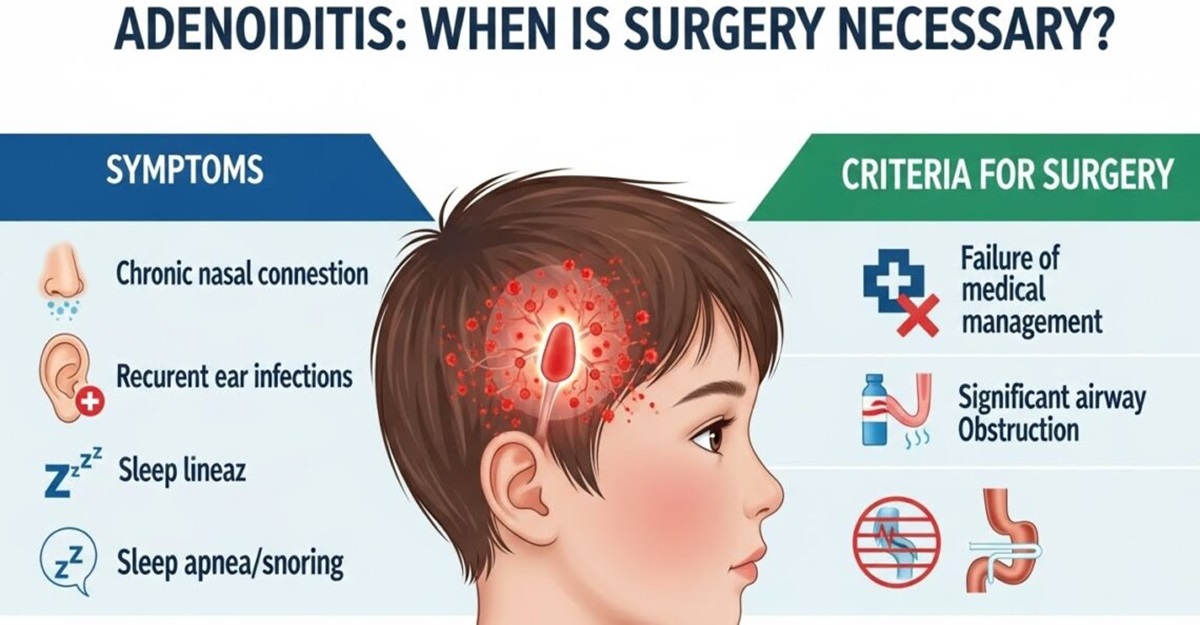
Adenoids may sound unfamiliar, yet they play a quiet role in a child’s daily health. Hidden at the back of the throat, these small masses of lymphatic tissue help the body respond to infections during early years. Most of the time, they do their job without drawing attention. Problems begin once swelling or infection sets in. That condition, often called adenoidid or adenoiditis, can slowly interfere with breathing, sleep, and overall comfort.
Parents usually notice small changes first. Breathing through the mouth becomes common. Snoring appears at night. Restless sleep follows. Over time, these signs raise concern and lead to questions about treatment. Some cases settle with basic care. Others persist and point toward surgical options. Understanding when surgery becomes necessary helps families make informed, calm decisions rather than rushed ones.
This guide walks through adenoidid step by step. Causes, symptoms, treatment choices, preparation, recovery, and alternatives appear in a clear order, using simple language and steady pacing.
What Are Adenoids and Why They Matter
Adenoids sit high behind the nose and above the roof of the mouth. Their role centers on helping fight infections, especially during childhood. Exposure to germs causes them to work actively, which sometimes leads to swelling. Temporary enlargement often causes no lasting harm.
Trouble starts once swelling becomes frequent or long-lasting. Airflow narrows. Drainage changes. Nearby areas feel pressure. At that point, adenoidid begins to affect everyday life rather than remaining a background issue.
Causes and Symptoms of Adenoiditis
Adenoiditis develops when the adenoids become inflamed. Infections commonly trigger this inflammation. Both viral and bacterial infections may play a part. Allergies can also contribute by causing ongoing irritation.
Symptoms tend to build gradually rather than appearing all at once. Common signs include difficulty breathing through the nose and persistent snoring during sleep. Frequent sinus infections may follow. Some children complain of sore throat or ear discomfort.
Ongoing symptoms deserve attention. Chronic adenoiditis may lead to complications if left unmanaged. Sleep apnea can develop as breathing becomes obstructed at night. Hearing issues may arise due to pressure changes near the ears.
Fatigue often accompanies these symptoms. Disrupted sleep patterns leave children tired during the day. A cough may appear, especially at night. Quality of life drops as rest becomes inconsistent.
How Adenoidid Affects Daily Life
Breathing problems rarely stay limited to nighttime. Mouth breathing during the day dries the throat and changes comfort levels. Speech may sound different. Concentration becomes harder once sleep remains poor.
Ear pain or fullness can interfere with hearing. That discomfort may affect learning and communication. Parents sometimes notice changes in behavior or mood linked to restless nights.
Addressing symptoms early helps prevent long-term strain. Even mild discomfort can become disruptive once it repeats often.
Treatment Options for Adenoiditis
Treatment usually starts with conservative care. Doctors often recommend antibiotics when a bacterial infection appears responsible. That approach aims to reduce inflammation and shorten recovery time.
Allergy-related cases may respond to antihistamines or nasal corticosteroids. These options focus on easing irritation and improving airflow. Breathing becomes easier once swelling decreases.
Home care measures sometimes bring comfort. Steam inhalation helps soothe nasal passages. Saltwater gargles can ease throat discomfort. Fluids play an important role as well, helping thin mucus and support recovery.
Persistent symptoms prompt closer monitoring. Doctors reassess progress over time rather than rushing decisions. Surgery enters discussion only after other options fail to bring lasting relief.
When Is Adenoid Surgery Necessary?
Surgery becomes necessary once symptoms disrupt daily life despite treatment. Recurrent infections signal that inflammation keeps returning rather than resolving fully. At that stage, surgical removal may offer lasting improvement.
Sleep apnea stands out as a major factor. Enlarged adenoids can block the airway during sleep, causing breathing pauses and restless nights. Removal often improves sleep quality and overall well-being in such cases.
Chronic nasal congestion that does not respond to medication also raises concern. When allergy treatments and decongestants no longer help, surgical options deserve consideration.
Growth and development may also influence the decision. Ongoing breathing and sleep problems can affect a child’s progress. Each case remains unique, so professional evaluation guides the final choice.
Preparing for Adenoid Surgery
Preparation begins with a pre-operative consultation. This meeting allows families to discuss concerns and understand the procedure clearly. Surgeons review medical history and current medications to reduce risk.
Parents should share details about allergies or past surgeries. Open communication supports smoother recovery later on.
Emotional preparation matters too. Children benefit from simple explanations that focus on comfort and improvement. Reassurance helps reduce anxiety before the procedure.
Planning ahead eases the day of surgery. Transportation home should be arranged in advance, as anesthesia may leave a child feeling groggy. Home preparation also helps recovery feel calmer.
What to Expect After Surgery
Recovery usually progresses without major difficulty. Mild throat discomfort and soreness often appear during the first few days. Prescribed medications help manage pain effectively.
Swelling around the surgical area may occur but typically fades within a week. Following care instructions supports proper healing.
Hydration plays an important role. Fluids soothe the throat and aid recovery. Soft foods often feel more comfortable during early healing.
Rest remains essential. Physical activity should stay limited for a short period to avoid strain. Gradual return to normal routines usually follows without issue.
Recovery Process and Potential Complications
Most children recover smoothly. Discomfort lessens within days. Breathing improvements often become noticeable as swelling decreases.
Parents should watch for warning signs. Excessive bleeding or difficulty breathing require immediate medical attention. Such complications remain rare but should never be ignored.
Follow-up visits help track healing. Doctors use these appointments to address concerns and confirm progress. Open communication during recovery supports reassurance.
Alternative Treatments for Adenoiditis
Some families explore alternative approaches alongside standard care. Natural methods aim to ease discomfort rather than replace medical guidance.
Saltwater gargles may help soothe throat irritation. Herbal teas, such as chamomile or ginger, often appeal for their calming properties.
Essential oils sometimes assist with congestion relief. Eucalyptus oil, used through steam inhalation or a diffuser, may help clear nasal passages.
Diet choices also support overall health. Foods rich in vitamins C and D strengthen the immune system and aid recovery.
Consultation with a healthcare professional remains important before starting alternative treatments. Safety and suitability vary from child to child.
Making the Right Decision
Deciding on surgery can feel overwhelming. Understanding the full picture helps families feel confident rather than pressured. Surgery does not represent failure. It marks a step taken once other treatments no longer provide relief.
Doctors consider symptom patterns, duration, and impact on daily life. Clear communication ensures that decisions align with a child’s needs.
Conclusion
Adenoidid can affect breathing, sleep, and comfort in noticeable ways. Many cases improve through simple treatments and careful monitoring. Persistent symptoms, recurring infections, or sleep disruption signal the need for further action. Surgery becomes necessary once quality of life suffers and other options no longer help. Early recognition and thoughtful guidance allow families to choose the best path forward with clarity and confidence.