
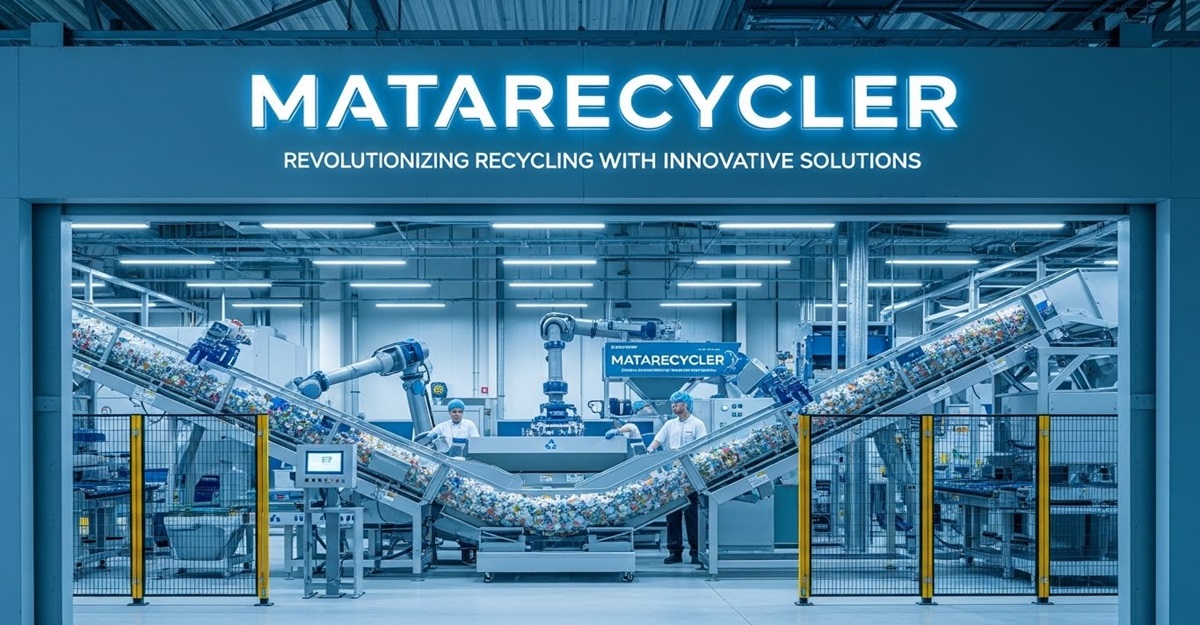
Waste keeps growing. Cities expand, consumption rises, and recycling systems often struggle to keep pace. People want to recycle correctly, yet confusion, limited access, and poor sorting still cause large amounts of reusable material to end up as trash. That gap between intention and action created space for something different. Matarecycler: Revolutionizing Recycling with Innovative Solutions steps into this space with a clearer, more practical approach to recycling.
Rather than treating recycling as an afterthought, Matarecycler places it at the center of community and environmental responsibility. The focus stays on simplicity, efficiency, and long-term impact. Recycling stops feeling like a chore and starts looking like a shared effort that actually works.
Why Traditional Recycling Falls Short
Recycling sounds simple. Toss paper here, plastic there, and glass somewhere else. Reality rarely matches that picture. Many programs rely on outdated systems that struggle to handle mixed waste. Incorrect sorting causes contamination, and contaminated loads often get rejected entirely.
Markets also influence recycling success. When demand drops for recycled materials, processing costs become harder to justify. Some areas scale back services, leaving residents with fewer options. Confusion grows, participation drops, and trust fades.
Education gaps add another layer. Many people recycle based on guesswork rather than clear guidance. One wrong item can ruin an entire batch. Over time, frustration builds and enthusiasm fades. These problems reveal a need for recycling systems that work better for both people and the environment.
Matarecycler’s Core Approach
Matarecycler approaches recycling from multiple angles at once. Technology, education, and collaboration work together rather than operating in isolation. This balanced approach allows recycling programs to become more accurate and more dependable.
Sorting systems used by Matarecycler reduce common errors that lead to contamination. Materials get identified more clearly, improving overall recovery rates. Recycling streams remain cleaner, and more items move through the system successfully.
Education plays an equally important role. Clear instructions help people understand not just what to recycle, but why proper sorting matters. Simple explanations replace confusing rules. That clarity encourages consistent participation.
Partnerships with municipalities support smoother operations. Collection routes improve, processing becomes more efficient, and communities gain confidence that their efforts truly matter.
Environmental Benefits That Matter
Every improvement in recycling efficiency carries environmental value. Less waste sent to landfills means fewer emissions and reduced pressure on natural resources. Materials reused through recycling help limit the need for new raw extraction.
Matarecycler’s system supports this cycle by maximizing usable output. Clean recycling streams allow materials to remain in circulation longer. That continuous reuse supports sustainability goals without demanding major lifestyle changes from residents.
Cleaner communities often follow. Reduced landfill reliance lowers pollution risks and improves overall environmental health. Small improvements across many locations add up over time.
Social Impact on Communities
Recycling success depends heavily on people. Matarecycler recognizes this by placing communities at the center of its efforts. Programs encourage shared responsibility rather than individual burden.
Schools play a key role. Educational initiatives introduce recycling habits early, shaping long-term behavior. Students bring lessons home, influencing family practices and spreading awareness naturally.
Communities also benefit through local engagement. Recycling stops being an abstract environmental concept and becomes a visible, everyday action. Participation grows when people see results and feel included.
Job opportunities may emerge as programs expand. Local involvement strengthens economic ties while supporting environmental goals.
Real-World Results
Practical outcomes show how a well-structured recycling system can reshape habits faster than many expect. When people see clear instructions and reliable processes, participation feels less confusing and far more rewarding. The experience becomes routine instead of frustrating, which helps positive behavior stick.
Community adoption stands out as one of the strongest indicators of success. Towns that introduced Matarecycler solutions began to notice visible reductions in landfill waste within a relatively short period. Residents responded well once recycling rules became easier to understand and collection systems felt consistent. Clarity removed hesitation. As confidence grew, more households participated regularly, creating a steady improvement across the entire community.
Educational programs produced equally meaningful results. Schools that took part reported better sorting accuracy once students received simple, hands-on guidance. Young learners quickly understood what belonged where, and those lessons did not stay inside the classroom. Students carried that knowledge home, influencing family habits and encouraging better recycling practices at the household level. Over time, education turned into everyday action.
Business participation added another layer of impact. Local businesses adopted tailored recycling setups that fit naturally into their daily routines. Waste levels dropped without interrupting operations, proving that effective recycling does not require major disruption. Clear systems allowed staff to follow correct practices easily, which helped businesses reduce waste while maintaining efficiency.
Together, these outcomes show how adaptable recycling systems can succeed across neighborhoods, schools, and workplaces. Consistent results across different environments highlight the value of approaches that combine clarity, engagement, and practical design.
Looking Toward Expansion
Growth remains part of Matarecycler’s vision. Expansion into new regions allows recycling improvements to reach areas facing similar challenges. Each location presents unique conditions, requiring customized approaches rather than one-size-fits-all solutions.
Future development focuses on refining tools and expanding educational outreach. Simpler interfaces, clearer instructions, and improved coordination aim to strengthen participation over time.
Collaboration remains essential. Working alongside local authorities and community leaders helps programs align with regional priorities. Long-term success depends on trust, consistency, and visible impact.
Why Matarecycler Stands Out
Matarecycler succeeds by addressing recycling as a system rather than a single process. Technology improves accuracy. Education builds understanding. Partnerships ensure reach. Together, these elements form a structure that supports lasting change.
Recycling becomes easier to understand and easier to maintain. People gain confidence that their efforts count. Communities benefit environmentally and socially without unnecessary complexity.
Conclusion
Matarecycler: Revolutionizing Recycling with Innovative Solutions reflects a practical response to modern waste challenges. Clear systems, informed communities, and thoughtful collaboration combine to improve recycling outcomes in meaningful ways.
As waste continues to grow worldwide, approaches that simplify participation and maximize results become increasingly important. Matarecycler shows how recycling can evolve into something reliable, effective, and shared by all.